
How to organise your kitchen
An organised kitchen makes everyday life simpler. Cooking feels easier, tidying up takes less time, and there's far less frustration when you know exactly where everything lives. Even small changes, like clearing your worktops or rethinking a few cupboards, can make the whole space feel easier to use.
This guide covers practical ways to organise your kitchen without overcomplicating things. From creating simple zones to cutting down on clutter, the ideas here are all about making your kitchen work better for you, day to day.
How to organise a kitchen for efficiency
There's no single right way to organise a kitchen; it depends on how you cook, who uses the space and how it's laid out. A setup that works for a busy family might not suit someone who only cooks occasionally, and an open-plan kitchen often needs a different approach than a compact one.
The key is to shape things around how you actually use the space, focusing on movement, reach and keeping everyday items close to where they're needed.
The steps below will help you to figure out what that looks like in practice.
Split the room into task-based zones
Start by identifying your main preparation, cooking and cleaning areas, then move the items for each task nearby. For example:
● Oils, spices and cooking utensils tend to work best close to the hob
● Containers, foil and food bags are often more useful near a preparation space
● Everyday crockery and cutlery are usually easiest to access near the dishwasher or sink, making unloading quicker and keeping movement to a minimum.
Clear zones can also make the kitchen easier to share. When items are stored logically, it’s simpler for everyone to find what they need and put things back in the right place.
Prioritise item placement according to frequency of use
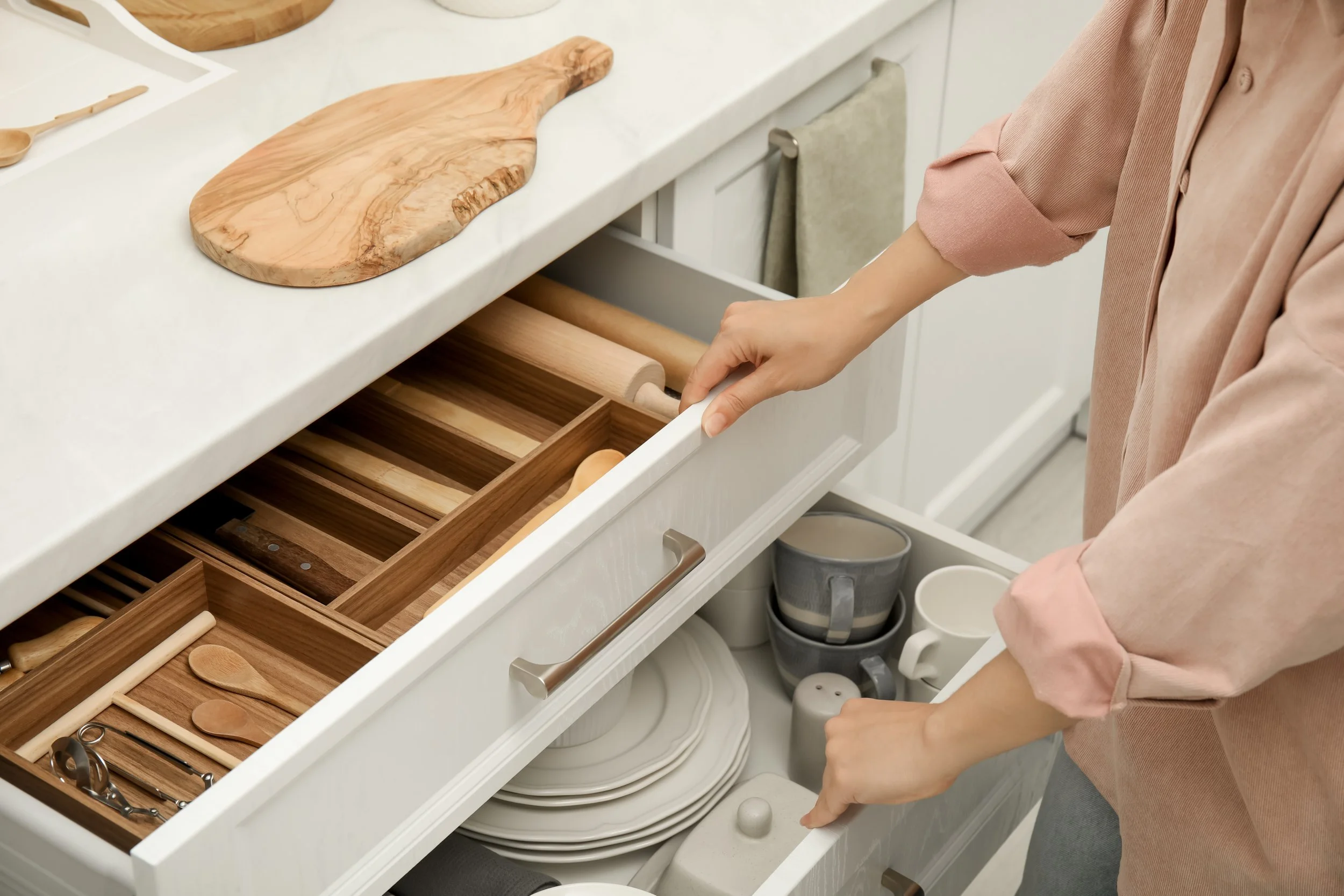
Once items are grouped by task, it helps to think about how often you actually use them. Keep everyday items within easy reach, while less frequently used pieces can be stored higher up or further back in cupboards.
For example, mugs, plates and cooking utensils are usually best kept at eye level or in easy-to-access drawers. Appliances used occasionally, such as slow cookers or large serving dishes, can be stored on higher shelves or in less central cupboards. This keeps prime storage space free for the things you reach for most often.
Give everything a home
Once you have grouped items according to their function and prioritised what you use most, the next step is making sure everything has a consistent place. This helps to prevent items from being left on worktops or moved between cupboards, which can quickly undo your organisation.
Try to keep similar items together in one dedicated spot rather than splitting them across different areas. For example, store all baking items in one cupboard or drawer, or keep food storage containers together instead of spreading lids and bases in separate places. This makes it easier to find what you need and quicker to put things away.
Keep worktops and dining surfaces clear
Keeping worktops and dining surfaces clear makes it easier to use the kitchen flexibly, whether you are preparing food, unpacking shopping or sitting down to eat. Try limiting surfaces to a few regularly used items and move everything else into cupboards or drawers.
If certain appliances need to stay out, consider grouping them in one area rather than spreading them across the room. This keeps the rest of the worktop free and helps the kitchen feel more organised without losing practicality.
Banish items that don’t belong in the kitchen
Kitchens often become a catch-all for items from elsewhere in the home, from paperwork and keys to tools and chargers. These things take up valuable space and make cupboards harder to keep organised.
It helps to regularly move anything that does not relate to cooking, dining or food storage back to its proper place so it doesn’t build up and take over the space.
Schedule decluttering and re-evaluation sessions
Setting aside time every so often to review cupboards and drawers helps to keep things manageable. This doesn’t need to be a full clear-out - simply checking for duplicate items, unused gadgets or empty packaging can free up space.
It can also be useful to notice what you’re not using. If certain items haven’t been touched in months, they may be better stored elsewhere or removed entirely. Small, regular resets are often easier to maintain than reorganising everything at once.
Consider installing a custom-built set-up
If storage still feels limited despite reorganising, it may be worth considering a more tailored solution. A custom-built kitchen can make better use of awkward corners, unused wall space and full ceiling height, helping you to create extra storage where standard units often fall short.
Features like deeper drawers, integrated organisers and purpose-designed cupboards can also be planned around how you actually use the space. This makes it easier to keep everyday items accessible while reducing clutter and making the kitchen simpler to maintain.
Organising your kitchen is often about making small, practical changes over time. If the layout still feels limiting, a more tailored kitchen storage solution can help you make better use of the space available. Either way, a well-organised kitchen is easier to keep tidy, simpler to use and more enjoyable to spend time in.