
Home office design trends 2026
A home office is now much more than just a desk and chair in the corner. In 2026, people are designing these spaces to be comfortable, calm and enjoyable to use.
Whether you have a whole room to play with or your workspace is nestled in a handy corner, the aim is to balance productivity with the overall atmosphere of your home. The office should feel like a natural part of everyday living, rather than a space that feels out of place.
Here are some of the most popular home office design trends for 2026, plus ideas for creating more thoughtful, flexible workspaces.
Home office interior design trends for 2026
Designing a home office in 2026 is less about following a set layout and more about choosing elements that improve how the space works day-to-day. This could mean adjusting lighting to reduce screen glare, introducing natural materials to create a calmer atmosphere or selecting furniture that adapts when the room is used for more than just work.
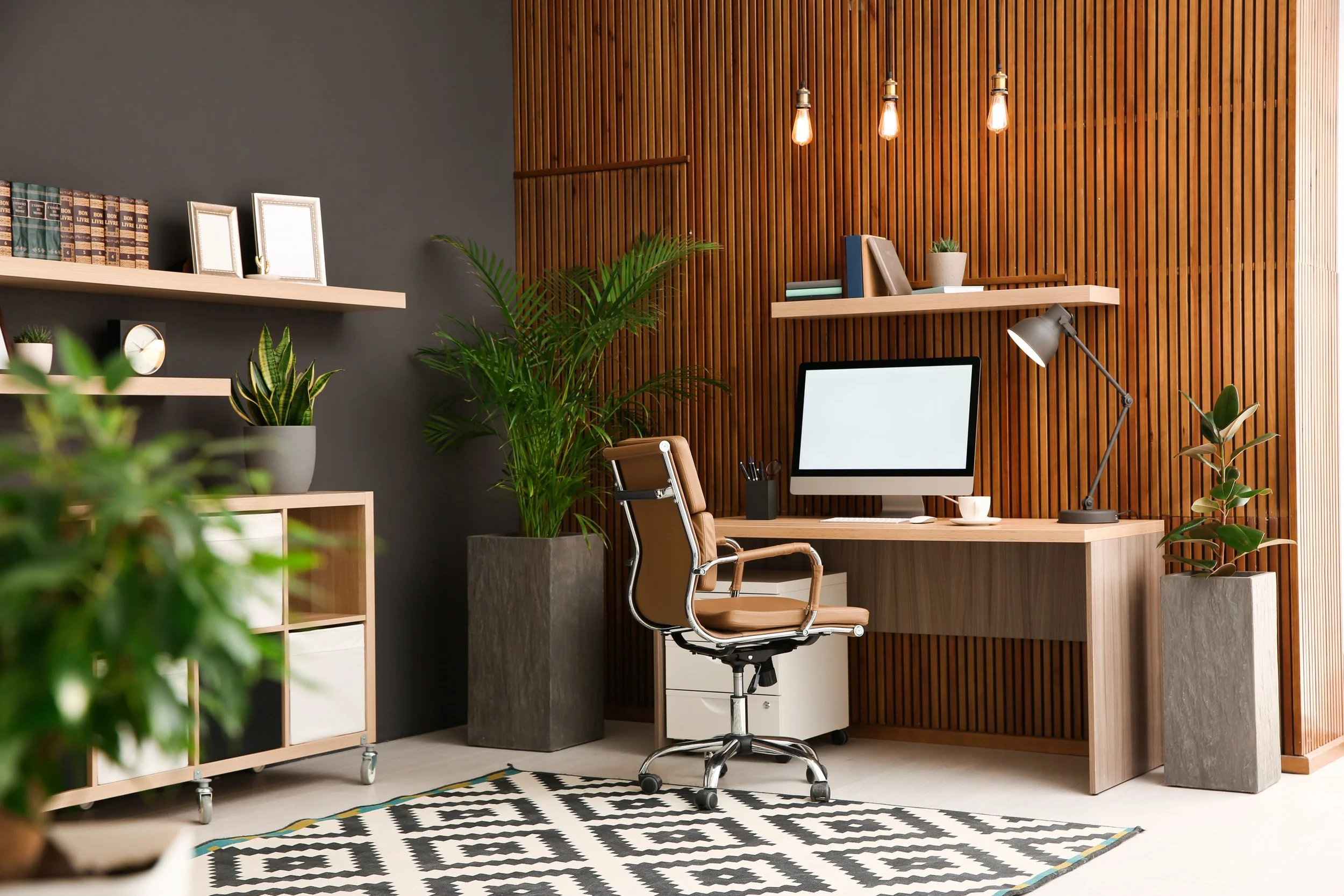
Home office designs are also starting to blend more naturally with surrounding rooms. Similar materials, consistent colour schemes and hidden storage can help the workspace to feel like part of the home, which is especially useful in bedrooms or multipurpose spaces.
There’s also more attention being paid to keeping technology discreet and using simple touches, such as mirrors, to make the room feel brighter and more open. The trends below reflect this more relaxed, practical approach to home office design in 2026.
Comfortable lighting
Lighting plays a big role in home offices, especially as more people spend longer working from home. Instead of relying on a single overhead light, try layering sources to keep the space comfortable throughout the day. A desk lamp for focused work, softer ambient lighting and natural light where possible can all help to reduce strain and create a relaxed atmosphere.
Simple ways to introduce comfortable lighting include:
● Positioning an adjustable desk lamp beside your screen to reduce glare
● Adding a wall light or floor lamp for softer background lighting during calls
● Placing your desk near a window or using sheer blinds to diffuse daylight
● Choosing warm-toned or dimmable bulbs for a more relaxed feel in the evening.
Small changes like these can make the workspace easier to use throughout the day without needing major alterations.
Nature as a foundation
Natural materials continue to shape home office design in 2026. Wood finishes, soft neutral colours and subtle textures all help to create a calmer environment that feels less formal than a traditional office.
Plants are another simple way to introduce a natural feel. A small plant on a desk or a larger one in a corner can soften the space and add visual interest without overwhelming the room.
Small details, such as woven accessories or linen fabrics, also help to make the office feel more relaxed and connected to the rest of the home.
Invisible tech
Technology is essential in a home office, but in 2026 the emphasis is on keeping it discreet. Hidden cable management, built-in charging points and wireless accessories all help to reduce visual clutter. This is particularly useful in spaces that serve more than one purpose, where the workspace needs to blend into the background when not in use.
Simple ways to keep technology less visible include:
● Using cable management trays or built-in desk cut-outs to hide wires
● Choosing wireless keyboards, mice and chargers to reduce clutter
● Adding drawers designed to store laptops and other equipment when not in use
● Hiding printers or routers inside cupboards or closed shelving
● Installing built-in sockets or pop-up charging points within the desk.
These small adjustments help the space function well for work while maintaining a calmer, more organised look.
Furniture with function
Multifunctional furniture is becoming more popular in home offices, especially in smaller spaces. Pieces that serve more than one purpose help the room to adapt throughout the day without adding extra bulk.
Practical ways to introduce furniture with function include:
● If your home office is located in your bedroom, choosing a desk that can double as a dressing table or console
● Using shelving with hidden storage for paperwork and office essentials
● Opting for seating that works for both desk use and occasional relaxation
● Installing a floating desk to create a workspace without taking up floor space
● Incorporating built-in joinery to combine storage, shelving and desk space
Compact, flexible furniture helps to keep your home office practical while allowing it to sit comfortably within the wider home.
Mirror magic
Mirrors are a simple but effective addition to home offices. They help to reflect natural light, making the space feel brighter and more open, particularly in smaller rooms or areas with limited windows. Even a small mirror placed opposite a window can help to distribute light more evenly.
Mirrors can also help to visually expand the workspace, creating a greater sense of depth. This is especially useful when the office is part of another room, as it helps to define the area without adding bulky furniture. Subtle and practical, mirrors offer an easy way to enhance both light and space.
Home office design in 2026 is all about creating a space that works hard without feeling like it. Simple updates, from softer lighting and natural textures to hidden tech and multifunctional furniture, can transform even a small corner into somewhere you actually enjoy spending time.
With a few thoughtful choices, a home office can feel calm, flexible and effortlessly connected to the rest of your home, making the working day feel that little bit easier.