
What is a media wall?
Media walls have quickly become one of the most sought-after features in modern interior design, transforming how we approach living spaces in 2026. As homes increasingly centre around both relaxation and visual appeal, many homeowners are looking for solutions that combine practicality with a refined, cohesive aesthetic.
Rather than relying on standalone furniture, there’s a growing shift towards more integrated, tailored designs that enhance the overall flow of a room. This approach not only creates a stronger visual focal point but also allows for a more organised living environment with that extra wow factor.
In this blog, we explore what makes a media wall and how it differs from other stylish home entertainment solutions. Keep reading to learn more.
What is a media wall in a house?
A media wall is a bespoke, built-in feature that brings together key elements of your living space into one streamlined design. Often, this means combining your entertainment system with concealed storage and a focal point like a fireplace or mantelpiece.
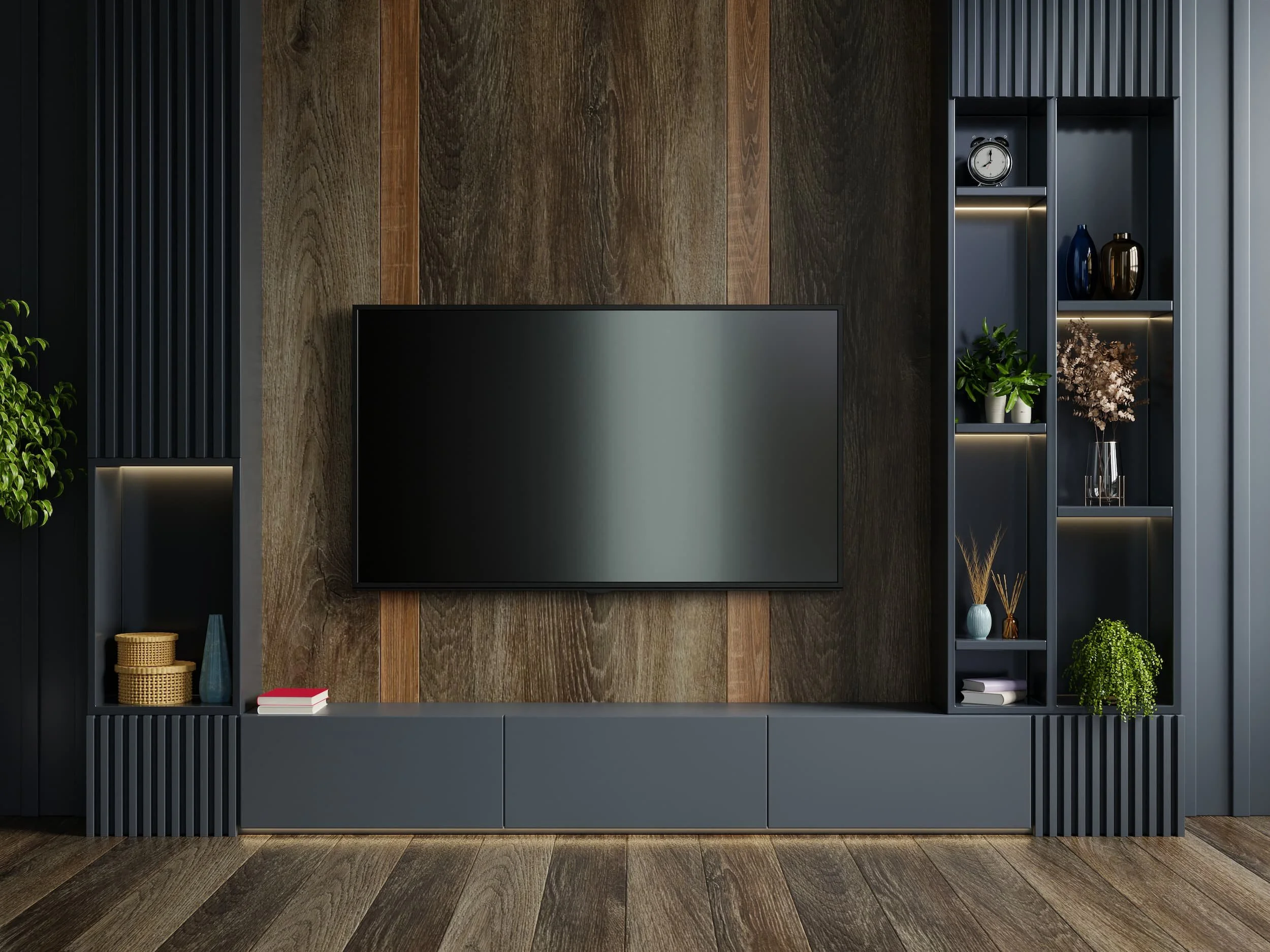
Typically spanning a main wall in a lounge or open-plan living area, media walls are designed to provide a sleek alternative to large, bulky, standalone furniture. They’re meant to be bespoke, meaning you can design a bespoke solution for your particular space that does everything you need it to.
Unlike standalone furniture, a media wall is tailored to suit both the proportions of your room and how you use it day-to-day. It allows for a clean, clutter-free finish by concealing cables, hiding away devices such as speakers or entertainment consoles and incorporating clever storage solutions to keep everything neatly organised.
A media wall can be as simple or complex as you need it to be. You might opt for:
Something as uncomplicated as a TV mount, concealed cables and a few shelves for ornaments and keepsakes
A more comprehensive wall including sleek hideaways for DVD or record players and space to store physical media close by.
Media walls offer the opportunity to introduce texture, accent materials and lighting to your living space in a measured and contained way. With options including natural wood or stone-effect surfaces, a media wall can be a highly practical alternative to a standard feature wall.
How is a media wall different from a home cinema or media room?
If you’re planning a space for entertainment, it’s important to understand the difference between media walls, media rooms, and home cinemas, as each offers a distinct experience that can suit different purposes.
Media wall
As discussed, a media wall spans a single wall within your main living area. It doesn’t take up a lot of space, leaving you free to decorate the rest of the room however you like - making it ideal for anyone looking to upgrade their viewing set-up without dedicating an entire room to it.
Media room
In contrast, a media room is a separate space designed entirely for watching television, films, musicals or even gaming. While still comfortable and informal, a media room isn’t limited to a single wall, meaning you can include much more storage for physical media and optional extras like refreshment areas.
Home cinema
A home cinema takes this a step further, offering a fully immersive experience. Usually located in a dedicated room, it focuses on high-performance audio-visual equipment, controlled lighting, soundproofing and flexible, luxurious seating to replicate a true cinema feel.
The right choice for you depends on your storage needs, available space and how you prefer to enjoy entertainment at home.
What does a media wall look like?
A media wall is defined by its intended purpose of creating a clean, cohesive focal point within your living space that centres around your TV.
Visually, this kind of feature often spans a full wall or a defined section such as a chimney breast or alcove. This sectioning may be defined with cladding, wallpaper or paint to visually distinguish it from the rest of the room, as well as to reduce the visibility of certain aspects such as cables and entertainment consoles.
In the majority of cases, media walls are built into your living room or an open-plan lounge/diner set-up - but this doesn’t have to be the case. Depending on your space, you may prefer to have a media wall set-up in a larger kitchen or kitchen-diner, or even incorporate it into a sleek and stylish master bedroom design.
While every design is bespoke, most media walls include a combination of the following elements:
A centrally positioned television, often recessed or wall-mounted for a streamlined finish
Built-in cabinetry or drawers to conceal media devices, cables and everyday items
Open shelving for displaying books, decorative items or personal touches
An integrated electric or feature fireplace, adding warmth and visual interest
Subtle LED lighting to highlight textures, shelving or architectural details.
Most media walls incorporate a simple, balanced design that frames the TV with a symmetrical layout that helps to emphasise the clean, sleek look of the feature.
The result is a tailored addition to your home that feels both practical and considered. A well-designed media wall not only organises your space but also elevates it, creating a polished, modern backdrop for everyday living and entertaining.
Not every home needs a media wall, but it can be a great way to elevate your watching experience without having to dedicate a whole room to it. The beauty of a media wall is that it looks so stylish it suits the room even when you’re not watching TV - helping your home to look elegant day and night.