
How to design media walls
A well-designed media wall can transform a living space, providing a striking focal point that’s both stylish and practical. More than simply a place to mount a television, a media wall can bring together storage, display shelving and beautiful finishes to create a feature that adds immediate appeal to your home.
At Merilyn Phillips, we believe a media wall should be bespoke to your needs. In this guide, we explore how to design media walls with elegance, function and longevity in mind.
How to design a media wall for your home
Before getting started with your media wall plans, it is important to understand exactly what you want the feature to achieve. A media wall should not only look impressive - it should also work beautifully for your room, your lifestyle and your everyday routines.
Taking time to think through these considerations helps avoid costly changes later and ensures the finished media wall feels seamless, balanced and built to last.
Measure your space first
The first step to any home improvement project is to understand the space you’re working with. This can be the difference between a badly-fitted, off-the-shelf design and a bespoke, well-crafted media wall that suits your home perfectly.
Start by measuring the full width, height and depth of the wall you plan to use. It’s also helpful to note:
The size of your television
The distance from your seating area
Skirting boards
Existing and desired sockets
Radiators or fireplaces
Windows, doors and any alcoves.
These details can all influence the layout, cabinetry and positioning of your media wall. Accurate measurements help to ensure the finished feature feels suited to the room, rather than overpowering the space or looking too small.
You should also consider how much storage you need and whether you want shelving, a fireplace, soundbar or decorative lighting included. With clear measurements from the beginning, your designer can create a media wall that looks beautifully proportioned, functions properly and feels like a natural part of your home.
Allow room for device upgrades
If you want your media wall to stand the test of time, allowing extra room in the design for potential future device upgrades is a wise choice.
TVs, soundbars, games consoles and smart home technology can all change over the years, and leaving flexible space helps to ensure you can upgrade your entertainment systems without having to start over with a new media wall.
Plan for ventilation and cable storage
As well as building in space to allow for device upgrades, it’s also smart to include buffer space that supports the easy and effective use of your technology. That means allowing for ventilation and cables.
All devices involved in an entertainment system generate heat with use, and that heat can build up when they’re built into cabinetry or placed within enclosed shelving. Without enough airflow to avoid overheating, your technology may not perform as well as it should.
Cable storage is just as important. A well-designed media wall should hide wires, plugs and extension leads, while still allowing easy access when something needs to be changed, repaired or upgraded.
Consider the best height to mount screens for comfort
In most media walls, the TV is the largest thing to be included. That means nailing down the position of your TV is one of the most important parts of the design plan - everything else can be built in around it.
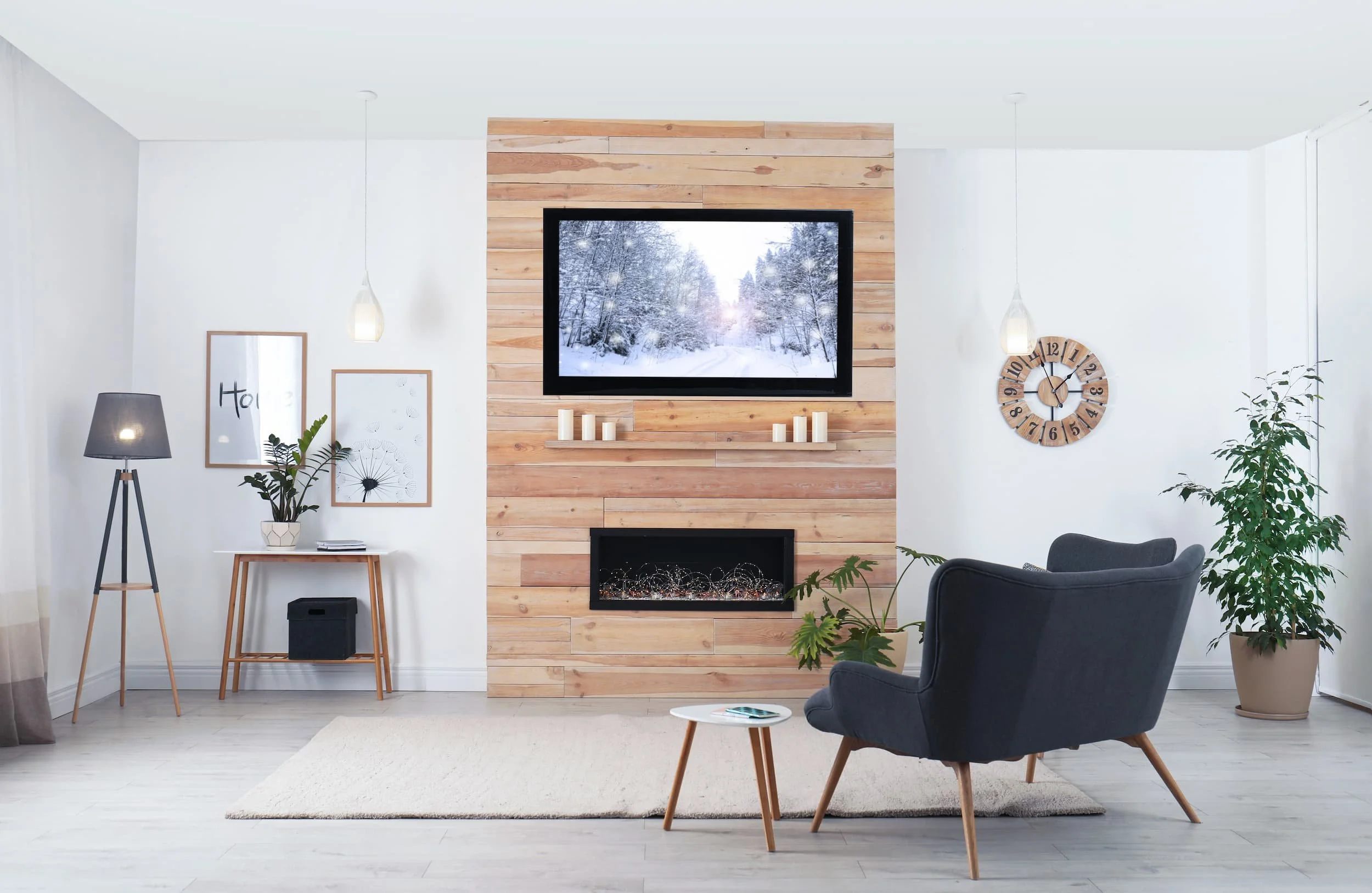
But why is TV positioning so important? Well, a TV that’s mounted too high often causes neck strain, especially when watching for longer periods. If it’s placed too low, the room may feel unbalanced and you may find it harder to relax when watching.
As a general guide, the centre of the screen should sit close to eye level when you are seated. However, the right height will depend on:
Your sofa position
The size of your TV
The layout of the room
Your natural eyeline
Of course, if you’re planning a media wall for another room, such as the master bedroom, then you’ll need to consider how lying in bed changes your normal eye level. Planning this early helps ensure your media wall looks elegant while still being practical. The aim is to create a feature that feels beautifully proportioned within the room, without compromising on comfort, ease of use or everyday enjoyment.
Integrate storage space for the essentials
Integrating storage space is key to creating a media wall that feels calm, organised and easy to live with.
While the main focus may be the TV, it’s important to think about the smaller essentials too. Physical media, spare cables, remotes, chargers, games controllers and instruction manuals all need a practical place to go. Without planned storage, these items can quickly make the space feel cluttered.
In a great media wall design, built-in cupboards, drawers and concealed shelving can keep everything close to hand without interrupting the overall design. Open shelving can also be useful for displaying books, decorative accessories or carefully chosen media items.
Good storage helps your media wall to work harder for your home. It keeps everyday essentials hidden but accessible, supports a cleaner finish and allows the feature to feel beautifully bespoke rather than simply decorative.
Take into account the size, function and design of the rest of the room
A media wall should feel like a natural part of the space, not something that has simply been added afterwards, and that means considering the surrounding area when fine tuning your design.
For example, in a smaller room, a slimline design with clever concealed storage may work best, while a larger living area may allow for statement shelving, integrated lighting or a wider built-in feature.
It’s also a good idea to consider how the room is used. A busy family living room may need durable finishes and practical storage, while a more formal snug might focus on softer lighting and decorative display space.
Your media wall should also complement the existing style of your home, from cabinetry colours and materials to handles, flooring and furniture. When everything is considered together, the finished design feels balanced, elegant and beautifully connected to the room around it.
Designing a media wall is all about balancing style, comfort and practicality, from accurate measurements and screen height to storage, ventilation and the wider room design. With careful planning, you can create a feature that feels integrated, easy to use and perfectly suited to your home.