
How to create more storage in a small kitchen
A small kitchen doesn’t have to mean a lack of storage. With the right kitchen design choices, even the most compact of spaces can hold everything you need, from everyday crockery to bulky appliances, without feeling cramped or cluttered.
The key is thinking beyond standard cabinetry and considering how every inch of the room can work harder for you. In this guide, we take a look at some of the most effective ways to create more storage in a small kitchen.
How to create more kitchen storage that suits your needs
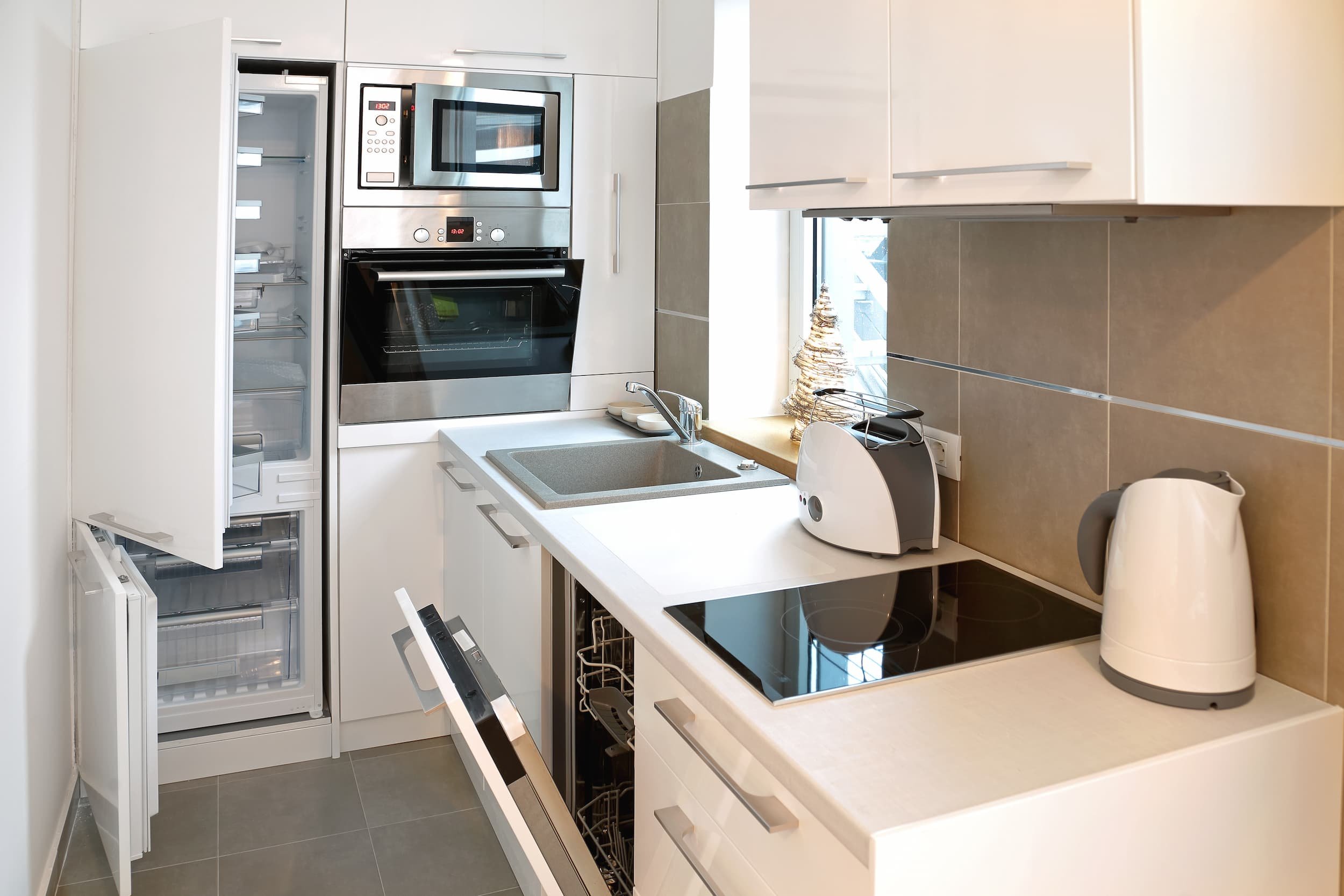
There’s no one-size-fits-all solution when it comes to kitchen storage. The best results come from a design that reflects how you actually cook, eat and live, rather than a generic layout borrowed from a showroom.
Before any decisions are made about cabinets, worktops or appliances, take stock of what you own, how often you use it and where it’s currently stored. Then, most importantly, consider what works and what doesn’t.
Understanding how much storage you need from the outset helps you to make informed decisions, creating a kitchen that stays organised, reduces clutter and continues to work well as your needs change.
Choose a bespoke design that utilises every inch of your kitchen space
A bespoke kitchen creates more storage by using the exact dimensions of your room, eliminating awkward gaps and unused corners that off-the-shelf kitchen units often leave behind. Every alcove, recess and unusual angle can be designed with purpose-built storage, making better use of the available space.
Bespoke design choices can turn previously dead space into practical storage for food, cookware and kitchen essentials. Popular options include:
Pull-out larders
Corner carousels
Made-to-measure drawers.
This tailored approach is especially valuable in period properties or awkwardly shaped rooms, where standard units often leave valuable space inaccessible.
Include cabinets that reach up to the ceiling
Ceiling-height cabinets make use of the vertical space above standard wall units, which would otherwise be left unused. That space is prime storage real estate and is ideal for storing items you only need occasionally, such as seasonal cookware, serving dishes or small appliances.
Top tip! To keep your higher cabinets practical, keep a step stool nearby so you can safely reach items stored there whenever you need to.
Full height cabinetry also has another benefit. As it draws the eye upwards, it can make the room feel taller and more spacious.
Make the most of multifunctional furniture
Having one piece of furniture that can do multiple jobs can really help to save on square footage in your kitchen.
For example…
An island with built-in drawers
A breakfast bar that doubles as extra worktop space
A bench seat with storage beneath the cushions…
… can all add function without taking up additional floor area.
Consider saving space with combination appliances
Appliances can take up a lots of space in a small kitchen, so it’s worth considering combination models that do the work of two. A microwave and oven combination or a fridge freezer with an integrated ice and water dispenser can reduce the number of separate units needed.
Built in and integrated appliances, designed to sit flush within cabinetry, also help to maintain a streamlined look while freeing up worktop space for food preparation.
Opt for lighter colours to make the room appear more spacious
While not a storage solution in the traditional sense, colour has a real impact on how spacious a kitchen feels, and by extension how easy it is to keep organised. Light, neutral tones on cabinetry, walls and worktops reflect more natural light, helping a small room to feel open rather than closed in. Glossy finishes can amplify this effect further.
A brighter, more open kitchen also tends to encourage better habits, as clutter is far more noticeable and therefore less likely to accumulate in the first place.
Take into account how you actually use your kitchen at every step
Ultimately, the most successful storage solutions are the ones that match your daily routine. Consider where you stand when you cook, which items you reach for most often and what tends to end up on the worktop rather than put away.
Storing everyday items within easy reach and reserving less accessible cabinets for occasional use items keeps the kitchen functioning smoothly. Once your new storage is in place, knowing how to organise your kitchen will help you to get the most out of it day to day.
A small kitchen, thoughtfully designed, can be just as practical as a larger space. By combining bespoke cabinetry, smart furniture choices and a layout built around how you truly live, it’s entirely possible to create a kitchen that feels both spacious and beautifully organised.